
A living trust is a popular estate planning tool used to manage assets during life and transfer them efficiently after death—often reducing the need for probate and improving privacy. People typically create living trusts to control how assets are distributed, appoint successor trustees, plan for incapacity, and keep estate administration more organized.
However, living trusts are only effective when documents are drafted clearly and the trust is properly funded (assets are transferred into the trust). That’s why free living trust forms and documents in Word are valuable: they provide structured, editable templates for trust agreements, trustee appointments, asset schedules, and amendments—helping you organize key trust details in a consistent format.
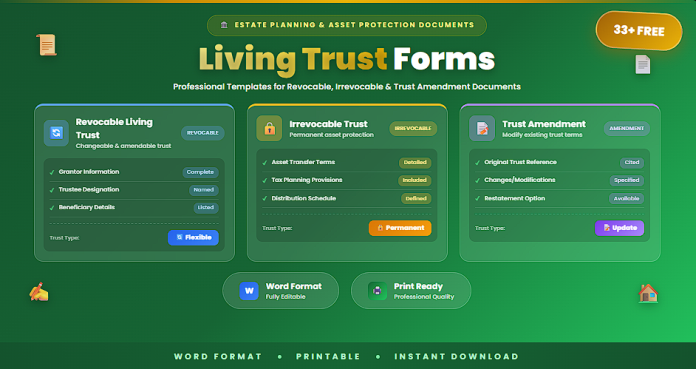
This guide includes 33+ free living trust forms and documents designed as general templates (final requirements vary by state and estate situation).
What Is a Living Trust?
A living trust (often a revocable living trust) is a legal arrangement where a person (the grantor) places assets into a trust managed by a trustee for the benefit of beneficiaries. During life, the grantor often serves as trustee and can change the trust. After death or incapacity, a successor trustee manages and distributes trust assets according to the trust terms.
A standard living trust document package typically includes:
✅ Living trust agreement
✅ Trustee and successor trustee sections
✅ Beneficiary provisions (basic)
✅ Trust property schedule (asset list)
✅ Certification of trust (summary document)
✅ Funding instructions and checklists
✅ Amendment or restatement documents
Who These Living Trust Templates Are Best For
These templates are commonly used by:
- Individuals planning estate transfers (basic)
- Families wanting privacy and structured distributions
- People planning for incapacity and successor trustee management
- Married couples coordinating shared assets (basic)
- Grantors managing real estate, accounts, and personal property
- People who want organized trust documentation for banks and institutions
Why Use Free Living Trust Forms and Documents?
Templates help you create consistent trust paperwork and supporting documents.
✅ Organized trust agreement structure
✅ Clear trustee and successor trustee appointments
✅ Ready-to-use asset schedules and funding checklists
✅ Easier updates through amendment templates
✅ Better documentation for banks and institutions (certification of trust)
✅ Print-ready signature sections and attachments
Templates also help reduce errors when preparing trust paperwork.
33+ Free Living Trust Forms and Documents (Word)
Below is a curated collection of living trust templates grouped by purpose and document type.
Core Living Trust Agreement Templates (1–10)
✅ Standard Revocable Living Trust Agreement Template (Basic)
✅ Simple Living Trust Form Template (Basic)
✅ One-Page Living Trust Summary Template
✅ Living Trust Agreement (Editable Word)
✅ Individual Living Trust Template (Single Grantor) (Basic)
✅ Joint Living Trust Template (Married Couple) (Basic)
✅ Living Trust Cover Page Template
✅ Living Trust Document Checklist
✅ Living Trust Signature Page Template
✅ Complete Living Trust Forms Pack (All-in-One)
Trustee, Successor Trustee, and Management Documents (11–18)
✅ Trustee Appointment Page Template
✅ Successor Trustee Acceptance Form Template
✅ Successor Trustee Resignation Form Template
✅ Trustee Power Summary (Basic) Template
✅ Trustee Instructions Letter Template (Basic)
✅ Incapacity Trigger/Physician Statement Request Template (Basic)
✅ Trust Administration Letter to Beneficiaries (Basic) Template
✅ Trustee Meeting Notes / Decision Log Template
Trust Asset Schedules and Funding Documents (19–26)
✅ Trust Property Schedule (Asset List) Template
✅ Schedule A — Real Estate Transfer Checklist (Basic)
✅ Bank Account Funding Checklist Template
✅ Investment Account Transfer Checklist Template
✅ Vehicle/Personal Property Assignment to Trust Template (Basic)
✅ Assignment of Personal Property to Trust Template
✅ Deed Transfer Cover Letter (Basic) Template
✅ Trust Funding Review Checklist Template
Amendments, Restatements, and Certifications (27–33+)
✅ Living Trust Amendment Template
✅ Living Trust Amendment with Section-by-Section Changes
✅ Living Trust Restatement Template (Basic)
✅ Trust Revocation Template (Basic)
✅ Certification of Trust Template (Basic)
✅ Short-Form Certification of Trust Template
✅ Beneficiary Designation Attachment Template
✅ Complete Trust Amendment + Certification Bundle (All-in-One)
Why Use Word Format for Living Trust Documents?
Living trust documents often require personalization and revisions over time.
Word format advantages include:
✅ Easy editing for grantor/trustee names and clauses
✅ Clean formatting for attachments and schedules
✅ Track Changes for review and updates
✅ Print-ready signature sections
✅ Easy PDF export for institutions
Word makes ongoing trust maintenance simpler.
Best Practices for Living Trust Documents
To make a living trust more effective:
✅ Keep trust language clear and consistent
✅ Name at least one successor trustee
✅ Provide beneficiary distribution instructions (basic)
✅ Add an asset schedule and update it regularly
✅ Fund the trust (transfer assets into it)
✅ Store originals securely and share trustee access info
✅ Use amendments carefully—avoid conflicting revisions
✅ Review state-specific signing/notary requirements
A trust that isn’t funded may not achieve the intended probate savings.
Common Mistakes to Avoid
Avoid these frequent trust issues:
✅ Creating a trust but not transferring assets into it
✅ Not naming a successor trustee
✅ Vague beneficiary instructions
✅ Multiple conflicting amendments
✅ Failing to update after major life changes
✅ Not keeping records for banks and institutions
Most trust problems come from incomplete funding and outdated documents.
Related Templates You May Need
- Codicil to Will Templates (Word)
- Notary Acknowledgment Templates (Word)
- Small Estate Affidavit Forms (Word)
- Estate Inventory Templates (Excel/Word)
- Power of Attorney Templates (Word)
Frequently Asked Questions
Is a living trust the same as a will?
No. A will transfers assets through probate, while a living trust holds assets and can transfer them according to trust terms (often with less probate involvement).
Do living trusts avoid probate?
Often, yes—for assets that are properly funded into the trust. Assets outside the trust may still require probate.
Can I change a living trust after creating it?
If it is revocable, yes—amendments or restatements are commonly used.
Does a living trust require notarization?
Requirements vary. Some trust documents are notarized for stronger acceptance by institutions.
Why use Word templates for living trusts?
Word templates are easy to customize and update as life circumstances change.
Conclusion
Living trusts help individuals manage assets during life and transfer them efficiently after death, often improving privacy and simplifying administration—especially when properly funded. The 33+ free living trust forms and documents in Word in this guide provide editable templates for trust agreements, trustee documents, asset schedules, amendments, and certifications.
With organized trust documents and proper funding, families can reduce delays, maintain clearer instructions, and manage estate transfers more smoothly.

.)