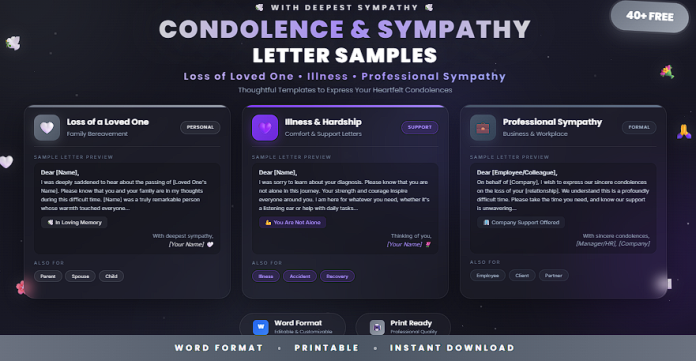

Condolence and sympathy letters are meaningful ways to express care, compassion, and support during times of loss. When words are difficult to find, a thoughtfully written letter can offer comfort, acknowledge grief, and remind someone that they are not alone.
Writing such letters requires sensitivity, balance, and sincerity. Free condolence and sympathy letter samples in Word provide carefully structured formats that help convey empathy without sounding impersonal or overwhelming.
This article presents 40+ free condolence and sympathy letter samples, suitable for personal, professional, religious, and formal situations.
What Is a Condolence or Sympathy Letter?
A condolence or sympathy letter is a written expression of compassion sent to someone who has experienced a loss.
A typical sympathy letter may include:
- A respectful acknowledgment of the loss
- Expressions of sympathy and care
- Positive remembrance of the deceased (if appropriate)
- Words of comfort or support
- An offer of help or presence
- A gentle and respectful closing
These letters help validate grief and offer emotional reassurance.
Why Use Free Condolence and Sympathy Letter Templates?
Using free condolence and sympathy letter templates offers several advantages.
Key benefits include:
- Gentle, appropriate wording
- Clear emotional structure
- Guidance during emotionally difficult moments
- Respectful tone suitable for various relationships
- Easy personalization without pressure
Templates help ensure messages remain thoughtful and sincere.
40+ Free Condolence and Sympathy Letter Samples (Word)
Below is a curated collection of free condolence and sympathy letter samples, organized by relationship and context.
Personal Condolence Letters for Family and Friends (1–16)
- Condolence Letter to a Close Friend
- Sympathy Letter to Family Member
- Condolence Letter for Loss of Parent
- Sympathy Letter for Loss of Spouse
- Condolence Letter for Loss of Child
- Sympathy Letter for Loss of Sibling
- Condolence Letter for Grandparent Loss
- Sympathy Letter for Extended Family
- Short Personal Condolence Letter
- Heartfelt Sympathy Letter
- Emotional Condolence Letter Sample
- Gentle Condolence Letter
- Condolence Letter Offering Support
- Sympathy Letter Expressing Care
- Condolence Letter Remembering the Deceased
- Personal Condolence Letter Template
Professional and Workplace Condolence Letters (17–26)
- Professional Condolence Letter to Employee
- Sympathy Letter from Employer
- Workplace Condolence Letter to Colleague
- Formal Condolence Letter for Client
- Business Sympathy Letter
- Condolence Letter from Management
- HR Sympathy Letter Template
- Professional Condolence Letter Sample
- Corporate Sympathy Letter
- Printable Workplace Condolence Letter
Religious, Cultural, and General Sympathy Letters (27–40+)
- Religious Condolence Letter
- Sympathy Letter with Faith-Based Message
- Condolence Letter with Prayer or Blessing
- Non-Religious Sympathy Letter
- Condolence Letter for Sudden Loss
- Sympathy Letter for Long Illness
- Condolence Letter for Tragic Loss
- Condolence Letter for Funeral or Memorial
- Universal Sympathy Letter Template
- Short and Simple Sympathy Letter
- Condolence Letter with Comfort Message
- Condolence Letter Expressing Remembrance
- Neutral and Respectful Sympathy Letter
- Complete Condolence and Sympathy Letter Templates Pack
Why Use Word Format for Condolence Letters?
Word is an ideal format for condolence letters due to its flexibility and accessibility.
Benefits of Word condolence letter templates include:
- Fully editable content
- Easy personalization for tone and message
- Suitable for print or digital sharing
- Clean and respectful formatting
- Compatibility across devices
Word templates allow thoughtful communication without technical difficulty.
Best Practices for Writing a Condolence or Sympathy Letter
To write a meaningful condolence letter:
- Acknowledge the loss clearly and respectfully
- Keep language gentle and sincere
- Avoid clichés or platitudes
- Do not rush advice or solutions
- Offer support without expectations
Simple, honest words often bring the most comfort.
Common Mistakes to Avoid
When writing condolence letters, avoid:
- Minimizing the loss or grief
- Overly long explanations
- Religious references unless appropriate
- Comparing grief experiences
- Focusing on yourself
Sensitivity and restraint are essential.
Frequently Asked Questions
Should condolence letters be handwritten or typed?
Both are appropriate. Handwritten letters feel personal, while typed letters offer clarity and formality.
Can condolence letters be sent professionally?
Yes. They are commonly used in workplaces and organizations.
Are these templates editable?
Yes. All templates are fully editable in Word.
Is it acceptable to send a condolence letter by email?
Yes, especially when distance or timing makes mail difficult.
Conclusion
Condolence and sympathy letters are powerful expressions of compassion and support during life’s most difficult moments. The 40+ free condolence and sympathy letter samples in this guide provide thoughtful, respectful formats for expressing care in personal, professional, and cultural contexts.
With templates available in Word format, you can confidently create messages that offer comfort, honor memories, and provide meaningful support when it matters most.

