
Understanding how stories are structured is an essential part of developing reading comprehension and writing skills. Whether students are analyzing literature, planning their own creative writing projects, or summarizing a story, organizing story elements helps them better understand the narrative.
A story map is a visual tool used to break down the components of a story, such as characters, setting, conflict, plot events, and resolution. By mapping these elements visually, students and writers can better understand how stories develop and how different parts of a narrative connect.
Using free printable story map templates in PDF, Word, and PowerPoint makes it easier for teachers, students, and writers to organize story ideas and analyze narrative structures. These templates provide structured layouts that help identify important story elements and track how a narrative unfolds.
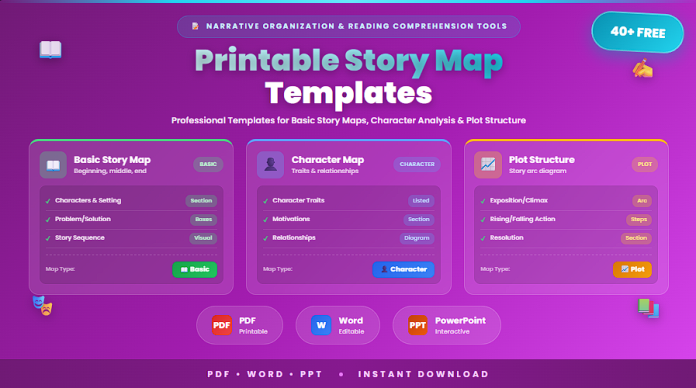
In this guide, you will find 40+ free story map templates designed for reading comprehension, creative writing, literature analysis, and classroom activities.
What Is a Story Map?
A story map is a graphic organizer used to identify and analyze the key components of a narrative. It helps readers and writers visualize how a story is structured and how the different elements interact throughout the plot.
Story maps are commonly used in education to improve reading comprehension and writing skills. They help students break down complex narratives into manageable sections and better understand the sequence of events.
A typical story map may include:
• Story title and author
• Main characters and supporting characters
• Setting (time and place)
• Main problem or conflict
• Major plot events
• Climax of the story
• Resolution or conclusion
By organizing these elements visually, story maps help readers understand the structure and meaning of a story.
When Should You Use a Story Map Template?
Story map templates can be used in a variety of educational and creative writing situations.
They are commonly used for:
• Reading comprehension activities
• Literature analysis assignments
• Creative writing planning
• Classroom storytelling exercises
• Book report preparation
• Teaching narrative structure
These templates help students organize story elements and improve their understanding of narrative development.
40+ Free Printable Story Map Templates (PDF, Word, PPT)
Below is a categorized collection of story map templates designed for different educational and writing needs.
Basic Story Map Templates (1–10)
• Standard Story Map Template
• Simple Story Structure Map
• Printable Story Map Worksheet (PDF)
• Editable Story Map Template (Word)
• Basic Narrative Organizer
• Story Elements Graphic Organizer
• Story Planning Template
• Simple Plot Structure Worksheet
• Story Breakdown Template
• Reading Comprehension Story Map
Beginning–Middle–End Story Map Templates (11–18)
• Beginning–Middle–End Story Map
• Story Sequence Organizer
• Narrative Flow Chart Template
• Story Event Timeline Template
• Plot Sequence Story Map
• Simple Story Timeline Worksheet
• Story Summary Organizer
• Narrative Development Map
Character and Plot Analysis Templates (19–28)
• Character Analysis Story Map
• Plot Diagram Story Map Template
• Conflict and Resolution Story Map
• Character Relationship Story Map
• Story Theme Analysis Template
• Story Character Development Chart
• Narrative Conflict Mapping Worksheet
• Plot Structure Organizer
• Character Motivation Story Map
• Literary Analysis Story Map
Advanced Story Mapping Templates (29–40+)
• Creative Writing Story Map Template
• Story Planning Worksheet for Writers
• PowerPoint Story Map Template
• Classroom Story Mapping Presentation
• Graphic Organizer for Storytelling
• Fiction Story Planning Template
• Book Analysis Story Map
• Story Mapping Lesson Plan Template
• Story Writing Planning Chart
• Complete Story Map Template Pack
• Multi-Character Story Map Template
• Advanced Narrative Structure Organizer
Key Elements of a Story Map
To effectively analyze or plan a story, story maps typically include several essential components.
Important elements include:
• Title and author of the story
• Main characters and supporting characters
• Setting of the story
• Central conflict or problem
• Sequence of major plot events
• Climax or turning point
• Resolution of the story
Including these elements helps students and writers understand how narratives develop and conclude.
Why Use PDF, Word, and PowerPoint Story Map Templates?
Using different formats allows educators and writers to choose the format that best suits their needs.
Word templates allow easy editing and customization for writing assignments or lesson planning.
PDF templates provide ready-to-print worksheets that students can complete during classroom activities.
PowerPoint templates are useful for presentations and visual storytelling exercises.
Benefits of using these formats include:
• Easy editing and customization
• Printable worksheets for classroom activities
• Visual presentation tools for teaching
• Organized story planning for writers
• Reusable templates for multiple lessons
These formats help make story mapping flexible and accessible.
Best Practices for Using Story Maps
To get the most value from story maps, educators and students should follow best practices when using them.
Recommended practices include:
• Identify the main characters early in the story
• Clearly describe the story setting
• Focus on the central conflict driving the narrative
• Track major plot events in sequence
• Identify the climax and turning point
• Explain how the conflict is resolved
These steps help ensure the story map accurately represents the narrative structure.
Common Mistakes to Avoid
Some mistakes can make story maps less effective for analysis or planning.
Common issues include:
• Not identifying the central conflict clearly
• Including too many minor details
• Ignoring the climax or turning point
• Failing to organize events in sequence
• Not describing the resolution of the story
Avoiding these mistakes helps ensure the story map remains clear and useful.
Frequently Asked Questions
What is a story map used for?
A story map is used to organize and analyze the main elements of a narrative such as characters, setting, plot, and conflict.
Who uses story maps?
Teachers, students, writers, and educators commonly use story maps for reading comprehension and creative writing activities.
Can story map templates be edited?
Yes. Word and PowerPoint templates can be customized to include different story elements.
Why are printable story map worksheets helpful?
Printable worksheets allow students to complete story analysis activities during reading or writing lessons.
Are story maps useful for creative writing?
Yes. Writers often use story maps to plan plot structure, character development, and narrative flow.
Conclusion
Story maps are valuable tools for organizing and analyzing narrative structure. They help students and writers understand how stories develop by identifying characters, settings, conflicts, and key plot events.
The 40+ free printable story map templates in PDF, Word, and PowerPoint included in this guide provide ready-to-use resources for reading comprehension activities, creative writing planning, and literature analysis.
Using structured story map templates helps educators teach narrative concepts more effectively while allowing students and writers to visualize the elements that shape a compelling story.

