
A well-structured syllabus is the foundation of any successful course. It provides students with a clear understanding of what to expect, including course objectives, topics, schedules, grading criteria, and expectations. Whether in schools, universities, or training programs, a syllabus serves as a roadmap that guides both instructors and learners throughout the course.
Teachers and educators rely on syllabi to communicate important information at the beginning of a course. It helps set expectations, establish structure, and ensure that all participants are aligned with the course goals.
Creating a syllabus from scratch can be time-consuming, especially when trying to organize all course details in a clear and professional format. That’s why using free editable syllabus templates in Word is a practical solution for educators.
These templates allow instructors to quickly build structured course outlines while customizing content to fit specific teaching needs.
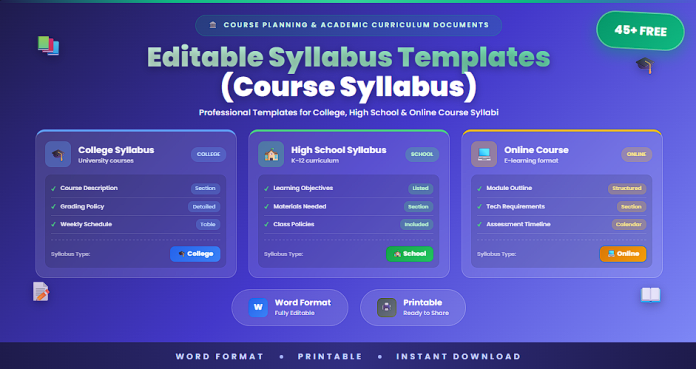
In this guide, you will find 45+ syllabus templates designed for academic courses, training programs, workshops, and professional learning environments.
What Is a Course Syllabus?
A course syllabus is a document that outlines the structure, content, and expectations of a course. It serves as a contract between the instructor and students, detailing what will be taught and how the course will be conducted.
A syllabus helps students understand how they will be evaluated and what is required for successful completion of the course.
A typical syllabus includes:
• Course title and description
• Instructor information
• Course objectives and learning outcomes
• Weekly schedule or timeline
• Assignments and assessments
• Grading policy
• Classroom rules and expectations
This document ensures clarity and organization throughout the course.
When Should You Use Syllabus Templates?
Syllabus templates are useful whenever a course or training program needs to be structured and documented clearly.
They are commonly used for:
• School and university courses
• Online courses and e-learning programs
• Training workshops and seminars
• Corporate learning programs
• Coaching and mentorship sessions
• Certification programs
Using templates helps educators create consistent and professional course outlines.
45+ Free Editable Syllabus Templates (Course Syllabus) In Word
Below is a categorized collection of syllabus templates for different educational and training needs.
Basic Syllabus Templates (1–12)
• Simple Course Syllabus Template
• Basic Class Syllabus Format
• Printable Course Outline Template
• Standard Academic Syllabus
• Clean Course Syllabus Design
• Simple Training Syllabus Template
• Beginner Course Outline Template
• General Class Syllabus Template
• Standard Course Plan Document
• Basic Instructional Syllabus Template
• Simple Curriculum Outline Template
• Editable Course Structure Template
Academic and Classroom Syllabus Templates (13–28)
• University Course Syllabus Template
• College Class Syllabus Format
• High School Course Syllabus Template
• Classroom Lesson Plan Syllabus
• Semester Course Syllabus Template
• Academic Curriculum Syllabus Template
• Course Schedule and Syllabus Template
• Student Course Outline Template
• Teacher Instructional Syllabus Template
• Classroom Course Planning Template
• Course Objectives Syllabus Template
• Detailed Academic Syllabus Format
• Weekly Course Plan Syllabus
• Student Learning Syllabus Template
• Classroom Course Guide Template
• School Course Outline Template
Professional and Training Syllabus Templates (29–45+)
• Corporate Training Syllabus Template
• Workshop Syllabus Template
• Online Course Syllabus Template
• Professional Development Course Outline
• Certification Program Syllabus Template
• Employee Training Course Syllabus
• Coaching Program Syllabus Template
• Skill Development Course Outline
• Training Session Syllabus Template
• Seminar Course Syllabus Template
• Instructor-Led Training Syllabus
• E-learning Course Syllabus Template
• Business Training Syllabus Template
• Comprehensive Course Syllabus Pack
• Advanced Course Planning Template
• Full Curriculum Syllabus Template
• Detailed Training Program Syllabus
Key Elements of a Course Syllabus
An effective syllabus includes several important sections that ensure clarity and organization.
Key elements typically include:
• Course title and description
• Instructor contact information
• Learning objectives and outcomes
• Course schedule and topics
• Assignments and deadlines
• Grading criteria and evaluation methods
• Classroom policies and expectations
These elements help students understand course requirements clearly.
Why Use Word Syllabus Templates?
Using Word templates provides flexibility and ease of customization for educators.
Word advantages
• Easy editing and formatting
• Customizable course details
• Professional document layout
• Printable and shareable format
These benefits make Word an ideal tool for creating course syllabi.
Best Practices for Creating a Syllabus
To create an effective syllabus, follow these best practices:
• Clearly define course objectives
• Provide a detailed course schedule
• Include clear grading policies
• Use simple and professional language
• Keep the syllabus organized and easy to read
These practices help improve student understanding and engagement.
Common Mistakes to Avoid
Some mistakes can reduce the effectiveness of a syllabus.
Common issues include:
• Providing unclear course objectives
• Missing important course details
• Overloading the syllabus with unnecessary information
• Using confusing or complex language
• Not updating the syllabus regularly
Avoiding these mistakes ensures a clear and useful course outline.
Frequently Asked Questions
What is a syllabus used for?
A syllabus outlines the structure, content, and expectations of a course.
Who uses syllabus templates?
Teachers, professors, trainers, and educators commonly use them.
Can syllabus templates be customized?
Yes. Word templates can be edited to fit different courses and programs.
Why is a syllabus important for students?
It helps students understand course requirements, schedules, and expectations.
Is a syllabus required for all courses?
Most educational institutions require a syllabus for course organization.
Conclusion
A well-designed syllabus is essential for organizing courses, setting expectations, and guiding students through their learning journey. It provides clarity on course objectives, schedules, and evaluation methods, helping both instructors and students stay aligned.
The 45+ free editable syllabus templates in Word included in this guide offer practical tools for creating professional course outlines for academic and training purposes.
Using these templates helps educators save time, maintain consistency, and deliver clear and structured learning experiences.

