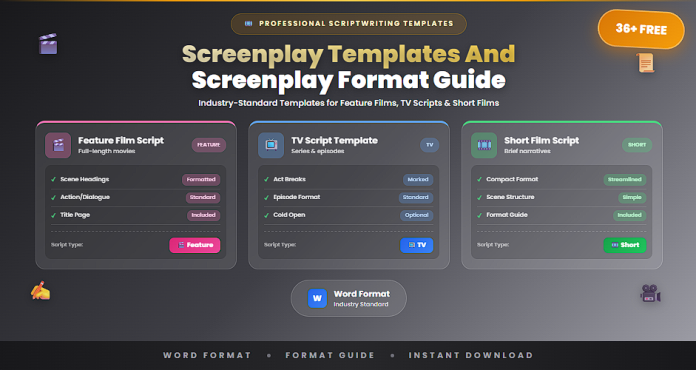


Writing a screenplay is both a creative and technical process. While storytelling is at the heart of any script, proper formatting is essential to ensure that your screenplay is professional, readable, and industry-ready.
Film producers, directors, and production teams rely on standardized screenplay formats to interpret scenes, dialogue, and actions clearly. Even the best story can be overlooked if it is not presented in the correct format.
That’s why using free screenplay templates in Word along with a screenplay format guide is a smart and efficient approach.
These templates provide ready-made formatting structures, allowing you to focus on writing your story rather than worrying about layout and spacing.
In this guide, you will find 36+ screenplay templates along with essential formatting guidelines.
What Are Screenplay Templates?
Screenplay templates are pre-formatted documents designed to follow industry-standard scriptwriting rules.
They help writers structure scripts correctly for film, television, and video production.
A typical screenplay includes:
• Scene headings (slug lines)
• Action descriptions
• Character names
• Dialogue
• Parentheticals (optional)
• Transitions
These elements ensure clarity and professional presentation.
Standard Screenplay Format (Quick Guide)
Understanding the correct format is essential for any screenplay.
Key formatting rules include:
• Font: Courier, size 12
• Margins: Standard screenplay margins
• Scene headings in uppercase
• Character names centered and uppercase
• Dialogue aligned under character names
• Action written in present tense
Following these rules ensures industry compatibility.
When Should You Use Screenplay Templates?
Screenplay templates are useful for any type of scriptwriting project.
They are commonly used for:
• Film scripts
• TV shows
• Short films
• YouTube videos
• Commercials
• Documentary scripts
Using templates ensures consistency and professionalism.
36+ Free Screenplay Templates And Format Guide (Word)
Below is a categorized collection of screenplay templates.
Basic Screenplay Templates (1–12)
• Simple Screenplay Template
• Basic Film Script Template
• Standard Screenplay Layout
• Clean Script Format Template
• Printable Screenplay Template
• Editable Script Format
• General Screenplay Template
• Simple Dialogue Script Template
• Basic Scene Script Template
• Entry-Level Screenplay Template
• Standard Film Script Layout
• General Script Writing Template
Film and TV Screenplay Templates (13–24)
• Feature Film Screenplay Template
• TV Script Template
• Short Film Script Template
• Series Episode Script Template
• Cinematic Script Template
• Dialogue-Focused Script Template
• Scene Breakdown Script Template
• Production Script Template
• Shooting Script Template
• Director Script Template
• Film Project Script Template
• Advanced Screenplay Layout
Advanced and Professional Screenplay Templates (25–36+)
• Professional Screenplay Template
• Industry-Standard Script Format
• Multi-Scene Script Template
• Detailed Film Script Layout
• Creative Screenplay Template
• Advanced Script Writing Format
• Full Production Script Template
• Professional Dialogue Script
• Complete Screenplay Pack
• High-End Script Layout
• Studio-Level Script Template
• Premium Screenplay Format
Key Features of Screenplay Templates
Screenplay templates include several useful features.
Key features typically include:
• Proper industry formatting
• Structured layout for scenes and dialogue
• Editable text fields
• Clear spacing and margins
• Printable and professional design
These features help writers focus on storytelling.
Why Use Word Screenplay Templates?
Using Word templates provides flexibility and ease of use.
Word advantages
• Easy editing and formatting
• Accessible for beginners
• Quick customization
• Printable and shareable
These benefits make Word ideal for scriptwriting.
Best Practices for Writing Screenplays
To create effective screenplays, follow these best practices:
• Focus on clear and concise storytelling
• Use proper formatting consistently
• Keep dialogue natural and engaging
• Show actions visually rather than explaining
• Revise and edit your script carefully
These practices improve readability and quality.
Common Mistakes to Avoid
Some mistakes can reduce the quality of your screenplay.
Common issues include:
• Incorrect formatting
• Overly long dialogue
• Lack of structure
• Too much description
• Inconsistent style
Avoiding these mistakes ensures professional results.
Frequently Asked Questions
What are screenplay templates used for?
They are used to write scripts in proper format for film and TV.
Who uses screenplay templates?
Writers, filmmakers, and content creators commonly use them.
Can screenplay templates be customized?
Yes. Word templates allow easy editing.
Why is screenplay format important?
It ensures clarity and industry acceptance.
Are screenplay templates suitable for beginners?
Yes. They simplify formatting and structure.
Conclusion
Screenplay templates are essential tools for writing professional and well-structured scripts. They help ensure that your work meets industry standards while allowing you to focus on creativity.
The 36+ free screenplay templates and format guide in Word included in this guide provide ready-to-use solutions for writers of all levels.
Using these templates helps save time, improve formatting, and create compelling scripts that stand out.