
Introduction
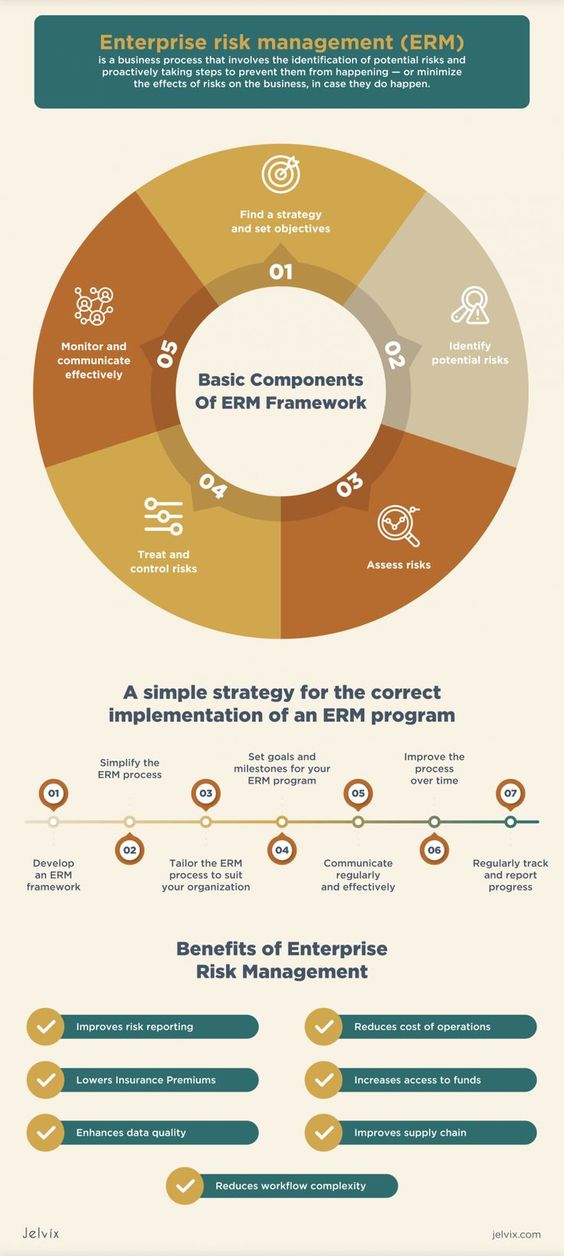
Enterprise Risk Management (ERM) is a process used by organizations to identify, assess, and manage risks associated with their operations. It involves the identification, assessment, and prioritization of risks and the development of strategies to manage them. ERM is a comprehensive approach to risk management that incorporates the entire organization and its activities, including operations, financial, legal, and other aspects.
Benefits of ERM
The primary benefit of ERM is that it provides organizations with an integrated approach to managing risks. ERM enables organizations to understand their risk profile and develop strategies to manage them. ERM also allows organizations to identify and prioritize risks, develop risk mitigation strategies, and monitor the effectiveness of their risk management efforts.
Components of ERM
ERM consists of four key components: risk identification, risk assessment, risk control, and risk monitoring. Risk identification involves identifying potential risks and their sources. Risk assessment involves analyzing the potential risks and their impact on the organization. Risk control involves developing strategies to mitigate and manage risks. Risk monitoring involves regularly assessing the effectiveness of the strategies and taking corrective action when necessary.
Types of Risk
Risks can be classified into four categories: strategic, operational, financial, and compliance. Strategic risks involve long-term decisions and strategies. Operational risks involve day-to-day operations and activities. Financial risks involve financial data and transactions. Compliance risks involve compliance with laws and regulations.
ERM Process
The ERM process typically involves the following steps:
1. Risk identification – Identify potential risks and their sources.
2. Risk assessment – Analyze the potential risks and their impact on the organization.
3. Risk control – Develop strategies to mitigate and manage risks.
4. Risk monitoring – Regularly assess the effectiveness of the strategies and take corrective action when necessary.
ERM Tools
ERM tools are used to help organizations identify, assess, and manage risks. These tools include risk management software, risk assessment tools, and risk management databases. Risk management software helps organizations manage risk data, analyze risk, and develop strategies to manage risks. Risk assessment tools help organizations identify and assess risks. Risk management databases store and organize risk data.
You might find these FREE courses useful
- Program Risk Management in ClickUp
- Risk Management in Personal Finance
- Investment Risk Management
- Market Risk Management: Frameworks & Strategies
- Credit Risk Management: Frameworks and Strategies
- FinTech Risk Management
- Implementing a Risk Management Framework
- Risk Management Specialization
ERM Best Practices
ERM best practices include developing a risk management plan, conducting risk assessments, implementing risk mitigation strategies, and monitoring risk management activities. Organizations should also ensure that they have appropriate policies and procedures in place to manage risks. Finally, organizations should ensure that they have adequate resources and personnel dedicated to ERM.

 is a process used by organizations to identify, assess, and manage risks associated with their operations.)