

Chore charts help children learn responsibility, consistency, and time management in a practical way. With clear expectations and visual tracking, kids can complete age-appropriate tasks independently while parents maintain organized household routines.
Without a structured system, chores may be forgotten, repeated reminders increase, and accountability becomes inconsistent. Free chore chart templates for kids in Word provide easy-to-edit, printable layouts that make family routines clearer and more engaging.
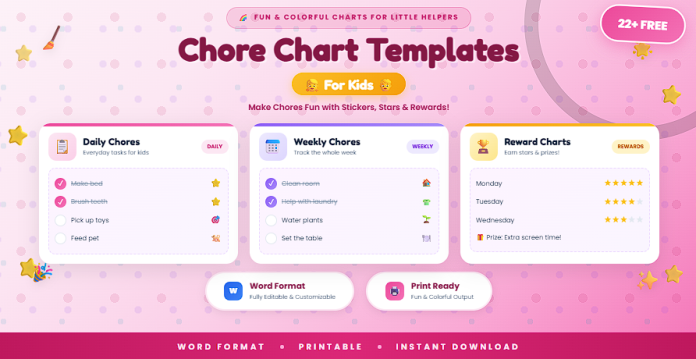
This guide includes 22+ free chore chart templates for kids designed for daily routines, weekly schedules, behavior support, and reward-based motivation systems.
What Is a Chore Chart Template for Kids?
A chore chart template for kids is a task-tracking worksheet that assigns household responsibilities and tracks completion over time.
A typical kids’ chore chart includes:
- Child name and age group
- Daily/weekly task list
- Completion checkboxes
- Parent initials or verification column
- Reward points or sticker section
- Notes for reminders and progress
These templates make chores visible, structured, and easier to follow.
Why Use Free Chore Chart Templates for Kids?
Using free chore chart templates for kids helps families build positive routines and reduce daily friction.
Key benefits include:
- Clear expectations for children
- Consistent routine building
- Improved independence and accountability
- Reduced repetitive reminders for parents
- Simple reward and motivation tracking
- Editable and printable home-friendly formats
A good chore chart turns chores into a teachable habit system.
22+ Free Chore Chart Templates for Kids (Word)
Below is a curated collection of kids chore chart templates, grouped by routine type and family use case.
Daily and Weekly Chore Charts (1–8)
- Daily Chore Chart for Kids
- Weekly Chore Chart Template
- Morning Routine Chore Chart
- Evening Routine Chore Chart
- School-Day Chore Chart
- Weekend Chore Chart for Kids
- Simple Checkbox Chore Chart
- One-Page Kids Chore Tracker
Age-Based and Family Routine Charts (9–15)
- Chore Chart for Ages 4–6
- Chore Chart for Ages 7–9
- Chore Chart for Ages 10–12
- Teen Helper Chore Chart
- Sibling Shared Chore Chart
- Family Rotation Chore Chart
- Room-Specific Chore Assignment Chart
Reward and Behavior-Linked Chore Charts (16–22+)
- Sticker Reward Chore Chart
- Points-Based Chore Tracker
- Allowance-Linked Chore Chart
- Responsibility and Habit Chore Chart
- Behavior + Chore Progress Chart
- Monthly Chore Achievement Chart
- Editable Kids Chore Chart (Word)
- Complete Kids Chore Chart Pack
Why Use Word Format for Kids’ Chore Charts?
Word is ideal for household planning templates because it is quick to customize and easy to print.
Word format advantages include:
- Fast edits for names, tasks, and schedules
- Easy personalization by age and routine
- Print-friendly for fridge or wall posting
- Reusable templates for each week/month
- Simple sharing between caregivers
It’s a practical format for real family workflow needs.
Best Practices for Using Kids’ Chore Charts
To make chore charts effective and sustainable:
- Assign age-appropriate, specific tasks
- Keep daily charts simple and realistic
- Use consistent review times (morning/evening)
- Combine completion tracking with positive reinforcement
- Rotate chores periodically to build broader skills
- Celebrate consistency, not just perfection
A supportive system builds long-term responsibility better than pressure.
Common Mistakes to Avoid
When setting up kids’ chore charts, avoid:
- Assigning too many tasks at once
- Using vague instructions (e.g., “clean room” without details)
- Inconsistent tracking or missed follow-through
- Rewards that are unclear or unpredictable
- Comparing siblings instead of tracking individual progress
- Changing rules too frequently
Clarity and consistency are the keys to success.
Frequently Asked Questions
What age should kids start using chore charts?
Many families start with simple tasks around ages 4–6, then increase responsibility gradually.
Should chores be daily or weekly?
Usually both—daily basics (bed, tidy-up) plus weekly deeper tasks (organizing, sorting, cleaning).
Can I link chores to rewards?
Yes. Reward systems can improve motivation when expectations are clear and consistent.
Are Word chore chart templates editable?
Yes. You can fully edit tasks, names, schedules, and reward sections in Word.
How do I keep kids engaged with chore charts long-term?
Use visual progress tracking, positive feedback, and periodic updates to tasks and goals.
Conclusion
Chore charts are more than task lists—they are tools for teaching life skills. The 22+ free chore chart templates for kids in Word in this guide help families create structured routines, improve accountability, and encourage independence through clear, editable planning tools.
With the right template, chores become easier to manage, progress becomes visible, and kids build habits that support long-term responsibility.